
Facelift in Memphis, TN
A facelift is one of the most effective ways to address sagging skin, laxity, jowling, and deeper facial tissue descent to restore a naturally refreshed, well-rested, and revitalized appearance.
Today’s advanced techniques are safer and more customizable than ever at The Langsdon Clinic, which offers one of the Midsouth’s most specialized facelift programs. We believe facelift surgery should enhance your appearance without changing who you are. Our surgeons create precise, subtle improvements that preserve your fundamental features while reversing visible signs of aging.
What a Facelift Can Improve
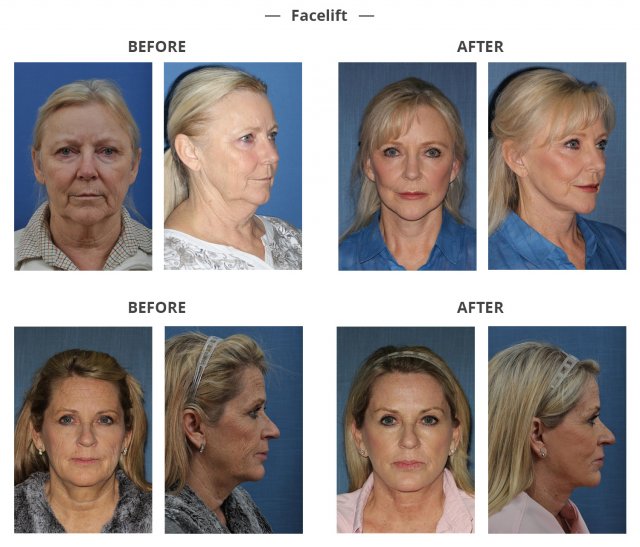
A facelift, or rhytidectomy, reduces sagging caused by loose skin, weakened muscles and drooping facial tissues in the lower face and upper neck. Depending on your concerns, this procedure can:
- Return facial tissues to a youthful, elevated position
- Improve jowls and lower-face heaviness
- Smooth and tighten the neck
- Restore definition along the jawline
- Help you look more alert and approachable
Expertise You Won’t Find Anywhere Else
Dr. Phillip R. Langsdon is a pioneer in facial plastic surgery and one of the nation’s leading experts in deep-plane facelift techniques. His innovations in submental muscular medialization and suspension have transformed modern neck and lower-face contouring. He published information about this technique in 2012, 2013, and again with statistical outcomes in 2018, and he’s proud that his work has influenced surgeons worldwide.
Dr. Sarah E. Langsdon joined our practice after completing a six-year integrated plastic surgery residency at the University of Missouri. She brings advanced training, extensive anatomical knowledge, and a modern, detail-oriented approach to surgical rejuvenation.
Facelift Videos

7:24

4:57

1:24

1:43

3:20
What Happens During Facelift Surgery at The Langsdon Clinic?
Your facelift will take place in The Langsdon Clinic’s accredited, on-site outpatient surgical center. Instead of undergoing general anesthesia, you will be under twilight sedation supplemented by local anesthesia, ensuring you remain comfortable and have little to no memory of your experience.
Facelift surgery primarily focuses on improving signs of aging that affect the lower face and neck, such as jowls and loose skin. If you also have concerns about the upper portions of your face, we can address them with complementary procedures such as a brow lift, eyelid surgery, or a midface lift.
Your surgeon will begin by making strategically placed incisions and using them to reposition the underlying muscular structures that sag and make you look older. A refined, conservative approach preserves your natural contours without overtightening, creating a smoother profile. Having repositioned your tissues, your surgeon will close the incisions with absorbable sutures and, in some areas, secure them with small skin clips along your hairline. Leaving your hair unshaved allows you to easily conceal your incisions while you heal.
What Is Recovery Like After Facelift Surgery?
You may return home the same day with a trusted friend or family member to drive you. For the first two weeks, you can manage bruising, swelling, and tightness by keeping your head elevated and avoiding strenuous exercise, including heavy lifting. We will provide you with detailed instructions to follow during this period, including how to care for your surgical sites and when to return to our office for progress checks.
Most patients feel comfortable returning to work and social activities around the two-week mark. Your incision lines will continue fading and maturing, and temporary numbness or firmness may last several months. You can maintain your results by using medical-grade skincare products, staying hydrated, reducing stress, eating a balanced diet, and staying out of the sun.
Schedule Your Memphis Plastic Surgery Consultation
Dr. Phillip Langsdon has more than two decades of experience bringing beauty and youth to the Memphis community. He is the only surgeon in the midsouth who has exclusively dedicated his practice to cosmetic surgery of the face, nose, eyes, head, and neck. A former president of the American Academy of Facial Plastic and Reconstructive Surgery, he has gained acclaim for his expertise in facelift and rhinoplasty surgery.
Dr. Sarah Langsdon’s advanced fellowship training in facial plastic surgery strengthens our commitment to exceptional, specialized care. With her patient-first philosophy and eye for detail, she is passionate about creating natural-looking, personalized results.
If you’re looking for a facelift in Memphis, call (901) 755-6465 to discuss your possible outcomes.

Schedule Your Facial Plastic Surgery Consultation
Board-certified facial plastic surgeon Dr. Phillip R. Langsdon is the only surgeon in the Mid-South whose practice is limited to and specialized in cosmetic surgery of the face, nose, eyes, head, and neck. A former President of the American Academy of Facial Plastic and Reconstructive Surgery, Dr. Langsdon has earned unprecedented recognition and praise as one of the best facelift and rhinoplasty plastic surgeons in America.
He is joined by Dr. Sarah E. Langsdon who completed a six year integrated plastic surgery residency at the University of Missouri and an additional fellowship specializing in facial aesthetic surgery.
Who Are the Ideal Candidates for a Facelift?
Lost skin elasticity, wrinkles, and sagging skin that make you look older can be frustrating. Dr. Phillip Langsdon or Dr. Sarah Langsdon can help you determine if you have the necessary qualities to undergo a facelift procedure.
Ideal candidates want to improve signs of aging while maintaining a natural appearance. You may want to consider this surgery if you:
- Are in good health
- Have realistic expectations
- Do not smoke or are willing to stop before and after surgery
- Have no medical conditions that interfere with healing
- Have had previous facial surgery and want expert evaluation
Patient Testimonials in Memphis
Those seeking a facelift in Memphis choose the Langsdon Clinic for more than its natural, perfectly balanced results; we’re known for our outstanding patient care. Learn for yourself what the Langsdon Clinic patient experience is like by taking a look at our patient testimonials.
Memphis Facelift FAQs
We’ve collected some of the most frequently asked questions by our facelift Memphis patients about the facelift and answered them in detail. At The Langsdon Clinic, we’re passionate about informing our patients, because we want them to understand their procedures every step of the way.
As we age, we lose precious facial volume, and our skin becomes thinner and less elastic. Our body starts to decrease its production of collagen and elastin, the proteins responsible for keeping our skin structure firm and youthful. Muscle tone in the face also decreases, leading to looser facial features. All these factors lead to facial skin that sags and droops around the mouth and the jaw.
Once the swelling has mostly dissipated a few weeks after the surgery, you will be able to notice a significant improvement in the reduction of loose skin on your lower face and neck.
A facelift can significantly enhance the appearance of a double chin, excess fat, and turkey neck by tightening the neck skin, repositioning deeper structures, and removing excess skin. If you have more advanced neck aging, you can consider combining your facelift with a neck lift for comprehensive rejuvenation.
A properly performed facelift should not interfere with normal facial movements. Dr. Langsdon’s techniques respect natural anatomy, minimize risks such as facial nerve injury, and avoid placing unnecessary tension on the skin or muscles.
Most patients look socially presentable within two weeks, but full facelift results continue to refine over several months as swelling subsides and new collagen forms. By around the six‑month mark, your face will settle into its final, naturally rejuvenated appearance.
Many patients enhance their surgical results with treatments such as dermal fillers or laser resurfacing to address skin irregularities, sun damage, or acne scars. These options can improve skin tone, texture, and skin rejuvenation while complementing the structural improvements of facial rejuvenation surgery.
A full facelift will lift sagging on the cheeks, along the jaw, and on the neck. A mini facelift will address a smaller amount of sagging on the cheeks. The mid-facelift will lift sagging skin on the upper cheek.
In addition to the traditional facelift and mid-facelift, Dr. Phillip Langsdon also offers a deep plane facelift, a technique that he has mastered and contributed to through his own innovative surgical techniques that are now used by other leading facelift surgeons worldwide. During surgery, the deep plane facelift is designed to maintain the skin and underlying tissues in alignment with each other while detaching and repositioning the entire system as a single unit. As a result, there is no strain on the skin or muscle, allowing the facial tissue to be repositioned for a more natural, subtle, and permanent effect.
A facelift’s results will last for years, and the excision of sagging, excess skin is something that can’t be reversed. However, the aging process will still continue after the facelift is completed. The rate that a patient’s aging will progress will depend on their skin quality and its elasticity. Other factors like a patient’s age, hormonal balance, and lifestyle can affect their aging process after the facelift is performed. Patients who want to maintain their results can request a touch-up.
Those seeking a facelift in Memphis choose The Langsdon Clinic for our natural results. The “too-tight” look associated with the facelift is more of a result of a surgeon’s work or old facelift techniques. When performed correctly, a facelift should make someone look younger and more refreshed; they shouldn’t look any different or appear too artificial. The Langsdon Clinic creates natural and balanced results by respecting a patient’s tissues and facial anatomy. We take great care to personalize each facelift so that they fit perfectly for each patient.
Your scars from the facelift will eventually heal and then fade. First, the scars will look pale and red before the scar fully matures. About a week or two after the surgery, you will be able to safely cover the scars with makeup; however, it might take a few months to about a year before the scars fully fade. Your incisions will be in discreet locations where they will not be easily visible while you heal.
It’s recommended that patients take a week off of work or school and up to two weeks away from social events. Patients might still have some bruising at the two-week mark, but it should be easy to cover with makeup by then. While patients will be able to see their new youthful looks a few weeks after the surgery, patients might still have some swelling, bruising, and discomfort in the incisions up to 5-6 months after the surgery. It might take up to a year before swelling has completely subsided.
The incisions are small and inobtrusive, going from the temple near the hairline, then traveling down in front of and around the ear. Most patients will also have a scar running below the chin that’s not easily noticeable.
Your facelift will take place in The Langsdon Clinic’s on-site, full-service outpatient facility, licensed by the State of Tennessee Department of Health and providing a hospital-grade, if not higher, level of safety. During your facelift, you will work with our board-certified anesthesiologist and a highly professional, compassionate medical staff.
Since a traditional facelift only addresses signs of aging on the lower half of the face, it can be combined with other compatible procedures like the forehead lift and the eyelid lift.
As you grow older and become bothered by signs of aging, you may find a facelift to be the right solution. If any of the following apply to you, a facelift is an option to consider.
- The way the skin of your face and neck tends to sag makes you feel self-conscious.
- In the mirror, you see that your face makes you look a lot older than you feel.
- You’ve begun wearing scarves and turtlenecks to hide the folds in your neck.
- You feel that looking older than your years is negatively affecting your career or relationships.
After your facelift, you can expect an improvement in self-confidence, as your younger appearance will highlight your health and vitality. Dr. Langsdon can help you find the right facial rejuvenation procedure that aligns with your unique situation and goals.
Your meeting with your doctor is a time for you to ask questions and be prepared to discuss:
- Your goals for this surgery
- Any medical conditions, drug allergies, and medical issues you might have
- The medications, vitamins, and supplements you take, as well as your alcohol, tobacco, and drug use
You should also expect your doctor to:
- Inquire about your general state of health and any preexisting health conditions or risk factors
- Go over your facelift options with you
- Examine and take measurements and photographs of your face
- Discuss the expected outcomes of your facelift, as well as any risks or potential complications
It usually takes around two weeks before you can attend social functions and return to work. The more treatment that is needed, the longer the recovery.
If you have some visible swelling and bruising at the end of this period, it may not be noticeable to others, or it may be camouflaged with makeup.
If your job tends to be strenuous, you may need a little more time to ensure that healing is well underway.