
The eyebrow lift is designed to improve drooping eyebrows. This condition may be one of the first signs of aging. Most people do not even realize that the eyebrow can contribute to the aged look. They simply note that their eyes seem smaller or more deeply set, or that they appear tired or look angry all the time. Excess skin, baggy eyelids, and forehead wrinkles can be exacerbated when the eyebrows and forehead tissues begin to droop. The relaxation of these underlying tissues may be such that the upper lids touch or overlap the eyelashes.
What Can an Eyebrow Lift Do for You?
The brow lift can gently lift the brow to a position that is more pleasing and relieves some of the concerns mentioned above. Sometimes the deep furrows between the eyebrows can be lessened.
Performed alone, a brow lift does not remove the upper eyelid skin or excess fat, “crow’s feet,” wrinkles, or alter the lower eyelid or cheek. Other facial procedures, such as eyelid surgery, mid-face lifting, facelift, chemical peeling, laser skin resurfacing, the Face Skin Care Program or Botox® injections are sometimes combined with eyebrow surgery or planned at a different time.
If you have any questions or wish to schedule a personalized brow lift consultation with Dr. Langsdon, please contact our office.

Schedule Your Facial Plastic Surgery Consultation
Board-certified facial plastic surgeon Dr. Phillip R. Langsdon is the only surgeon in the Mid-South whose practice is limited to and specialized in cosmetic surgery of the face, nose, eyes, head, and neck. A former President of the American Academy of Facial Plastic and Reconstructive Surgery, Dr. Langsdon has earned unprecedented recognition and praise as one of the best facelift and rhinoplasty plastic surgeons in America.
He is joined by Dr. Sarah E. Langsdon who completed a six year integrated plastic surgery residency at the University of Missouri and an additional fellowship specializing in facial aesthetic surgery.
How Does Your Brow Position Affect Facial Aging?
Your forehead determines how open, rested, and expressive your upper face appears. As your skin’s natural support structure weakens with age, your brows will gradually descend, giving your eyes a hooded or unfriendly look.
A combination of factors drives these changes:
- Loss of collagen and elastin that once kept forehead skin firm
- Gravity and soft-tissue laxity that allow the brow fat pads to shift downward
- Overactive brow-depressor muscles that pull the brows lower over time
- Genetic brow shape that may predispose you to early drooping
- Environmental stressors that accelerate tissue relaxation, including smoking, excess sun exposure, and dry air
Many patients express concerns about having “tired-looking eyes,” but the entire brow-forehead complex is often the source of the problem. As the brows fall, they compress the upper eyelids, deepen frown lines, and create a fatigued or stern expression. Correcting brow descent restores the natural architecture of the upper face, opening your eyes and refreshing your appearance without altering your unique features. Dr. Langsdon focuses on making subtle, balanced changes, avoiding the surprised or startled look that can come from an overdone approach.
Who Is a Good Candidate for a Brow Lift?
Ideal brow lift candidates are in good physical and mental health, have realistic expectations, and do not have conditions that could complicate surgery, anesthesia, or recovery. You may need to undergo a physical exam or other medical screenings to ensure you are healthy enough to undergo cosmetic surgery. If you smoke or vape, Dr. Langsdon will ask you to quit for several weeks before and after your brow lift.
You may wish to consider endoscopic forehead lift surgery if your aesthetic concerns include:
- Brows that sit below their natural anatomical position
- A permanently tired appearance or an angry or closed-off expression
- Excess upper eyelid skin worsened by brow descent
- Deeply etched glabellar creases or horizontal forehead lines
- Difficulty applying eye makeup due to hooding
- A desire to look friendlier and more vibrant
As a leader in facial plastic surgery, Dr. Langsdon will evaluate your brow shape and symmetry, skin thickness, forehead muscle activity, hairline position, and facial anatomy to create a subtle, natural, and balanced-looking result.
What Are Your Non-Surgical Brow Rejuvenation Options?
While surgery provides the most significant and longest-lasting improvement, nonsurgical treatments can complement a brow lift or let you “test-drive” cosmetic procedures if you’re not yet ready for surgery.
- Botox® Cosmetic to soften frown lines and subtly elevate your brows by relaxing underlying muscles
- Laser skin resurfacing to improve texture and fine lines
- Chemical peels for skin quality
- Medical-grade FaceMD™ skincare to maintain a healthy, glowing complexion
What Happens During an Eyebrow Lift?
Facial plastic surgery to address droopy eyebrows and forehead wrinkles is designed to achieve a more rested and youthful appearance. One of the methods through which the drooping brow may be improved is a forehead lift. The incision can be hidden in the hairline, placed in front of the hairline, or performed endoscopically. The surgical technique selected depends on the particular anatomy and condition of the patient. If a “behind the hairline” or “in front of the hairline” technique is used, a brow lift removes excess sksin. With the endoscopic brow lift technique, skin is not usually removed.
Sometimes the procedure of choice may be the direct brow lift in which the small incisions are made at the top edge of the eyebrows or in a forehead crease. In some patients the brow can be supported through a procedure performed entirely through the upper lid incision (transblepharoplasty brow lift) when done in combination with upper blepharoplasty. In some cases, a combination of the above forehead brow lift approaches are used. Deep sutures are sometimes used to support heavy brow and forehead tissues. Any of these procedures can be done alone or in combination with a facelift and/or other surgery. The procedure is usually performed at the clinic outpatient surgical center under twilight sedation supplemented with local anesthesia rather than general anesthesia.
When Will I See My Brow Lift Results?
Within a few weeks most of the visible signs of the eyebrow lift procedure will have disappeared, including swelling and bruising. After a direct brow lift you may simply have a piece of flesh-colored tape covering the incisions or the forehead. Incision lines may take a while to soften and lighten up because the skin in this area is relatively thick. Make-up can normally be used to camouflage the incision sites after the initial healing process is complete, typically after one or two weeks. Occasionally, light dermabrasion is recommended for the direct brow lift incision site.
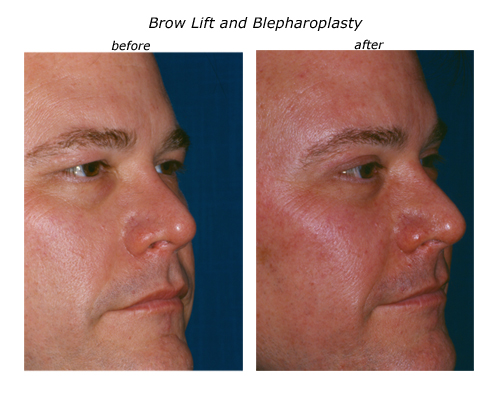
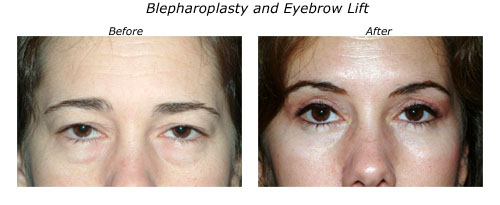
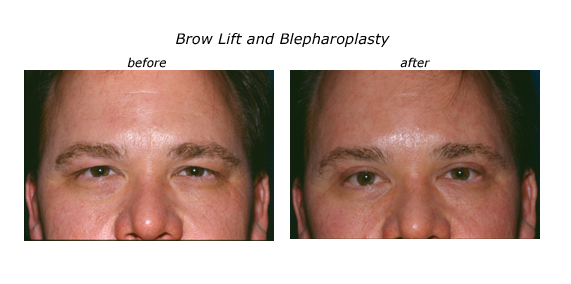
Eyebrow Lift Before and After Images
Memphis Eyebrow Lift FAQs
Various factors will affect your final price tag. Dr. Langsdon can give you an accurate cost estimate after meeting with you in person, evaluating the degree of aging you’re experiencing, and discussing your expectations for your brow lift outcomes.
After your brow lift, you’ll enjoy long-lasting results. Dr. Langsdon uses his skills to raise the brow area to a more youthful position. Following brow lift surgery, your well-rested expression can last a decade or more. While it’s essential to note that a brow lift does not halt the natural aging process, you can extend your results by maintaining a healthy lifestyle, getting plenty of sleep, avoiding stress, eating a balanced diet, and using sun protection. Patients who follow a consistent skincare regimen typically look younger than those who don’t.
Dr. Langsdon will perform your brow lift procedure while you’re anesthetized, so you won’t feel any pain during the surgery itself. Throughout your recovery process, you may feel some discomfort and a sensation of tightness throughout your forehead. If necessary, Dr. Langsdon can prescribe you pain medication, or you can manage any discomfort with over-the-counter solutions like acetaminophen or naproxen sodium or cold compresses.
While a brow lift repositions the forehead and makes you look less fatigued, it doesn’t address excess skin and fat on the upper and lower eyelids. A straightforward procedure called a blepharoplasty, or eyelid lift, will take care of those issues. If your upper eyelid skin is sagging and obscuring your vision, you’re likely an ideal candidate for upper blepharoplasty. If you have puffy undereye bags, you may wish to consider lower eyelid surgery. You can also choose to have an upper and lower blepharoplasty done simultaneously to give your eyes a brighter, more alert, and approachable appearance. During your consultation, ask Dr. Langsdon about combining a brow lift and a blepharoplasty if you want to address eyelid-related issues.
Brow lift technique selection depends on your hairline, brow shape, degree of descent, and skin quality. During your consultation, Dr. Langsdon will explain whether an endoscopic brow lift, coronal brow lift, temporal brow lift, pre‑trichial, direct, or transblepharoplasty approach is best for your anatomy based on your medical history.
Men often experience significant brow descent with age. If you feel your forehead detracts from your appearance, a brow lift can restore a more open, alert appearance without feminizing your face. Dr. Langsdon will tailor his surgical technique to match your hairline and brow shape.
A brow lift can significantly improve the appearance of the upper eye area by relieving the heaviness and hooding that results from a descended brow, making your eyes appear more open and defined without changing their shape or structure. However, it does not remove excess upper eyelid skin or address puffiness and bags beneath the eyes. For patients with both brow descent and eyelid concerns, Dr. Langsdon frequently combines a brow lift with an upper or lower blepharoplasty to achieve a more complete and cohesive rejuvenation of the entire eye area.
Most patients feel comfortable returning to work within a week to 10 days, depending on their healing response. Swelling and bruising or tightness and forehead numbness will continue to improve on their own over the next several weeks as your tissues soften and settle into their long-term position.
We encourage you to take light walks early in recovery to improve your circulation. However, please avoid strenuous exercise, heavy lifting, and other activities that raise your blood pressure for about three to four weeks, or until Dr. Langsdon clears you.
Dr. Langsdon takes great care to place brow lift incisions in discreet locations, typically within the hairline or within natural forehead creases, where they are well concealed and fade significantly over time. The specific incision placement will depend on the technique selected – whether endoscopic brow lift, coronal brow lift, temporal brow lift, or another approach – based on your hairline, brow shape, and degree of descent. Most patients find their scars to be virtually undetectable once fully healed with proper scar care, skincare, and sun protection.
There is no “ideal” age for a brow lift or a forehead lift. Candidates range from their 30s to 70s depending on genetics, lifestyle, and how early brow descent develops.
Many patients benefit from a combination approach. Dr. Langsdon will recommend the most effective sequence to achieve a refreshed, cohesive result.
You can usually wash your hair within a few days of surgery using a mild product like baby shampoo. Dr. Langsdon will provide specific instructions based on your incision placement.
A brow lift, also referred to as a forehead lift, is a cosmetic procedure designed to reposition descended brow tissue, smooth forehead lines and furrows, and restore a more open, alert, and youthful appearance to the upper face. As we age, the brow naturally descends due to weakening of the forehead muscles and the effects of gravity, contributing to a tired, stern, or sad expression. Dr. Langsdon uses his expertise to elevate the brow to a more natural, refreshed position that complements your overall facial features.
A brow lift procedure focuses exclusively on the upper third of the face, specifically the forehead, brow position, and glabellar lines between the brows. A facelift, by contrast, addresses sagging in the mid and lower face, including the cheeks, jowls, and jawline. For patients experiencing aging throughout multiple facial zones, Dr. Langsdon may recommend combining a brow lift with a facelift, neck lift, laser skin resurfacing, or other facial rejuvenation procedures to achieve a more balanced, comprehensive result.
Good candidates for brow lift surgery are men and women who are bothered by a heavy, descended brow, deep forehead creases, frown lines between the brows, or an overall tired or angry expression that does not reflect how they actually feel. Candidates should be in good overall health, non-smokers or willing to quit well in advance of surgery, and have realistic expectations for their outcomes. Dr. Langsdon will evaluate your brow position, hairline, skin quality, and degree of descent during your consultation to determine whether a brow lift is the most appropriate approach for your needs.
Most brow lift patients feel comfortable returning to light activity and desk work within one to two weeks. Swelling, bruising, tightness, and temporary forehead numbness are normal during the early recovery period and will continue to improve gradually in the weeks that follow. Strenuous activity, heavy lifting, and exercises that elevate blood pressure should be avoided for three to four weeks, or until Dr. Langsdon clears you. It’s important to rest with the head elevated. While improvement is visible early on, the final result continues to refine as swelling fully resolves over the coming months.
Yes. A brow lift is commonly combined with complementary procedures such as upper or lower blepharoplasty, a facelift, neck lift, fat grafting, or laser skin resurfacing to achieve a more complete facial rejuvenation. Addressing multiple areas of concern in a single surgical session can reduce overall recovery time and produce a more balanced, harmonious result. Dr. Langsdon will discuss which combination approach best aligns with your anatomy and aesthetic goals during your consultation.