Rhinoplasty (Nose Surgery) in Memphis, TN
Rhinoplasty, commonly called a nose job or nose reshaping surgery, changes the underlying bone and cartilage of the nose to improve its appearance, function, or both. Depending on the patient, surgery may reduce a prominent hump, refine a broad or drooping tip, straighten a crooked nose, adjust nostril width, improve facial proportions, or address structural problems that interfere with breathing.
At The Langsdon Clinic in Germantown, Dr. Phillip R. Langsdon and Dr. Sarah E. Langsdon bring highly specialized facial plastic surgery training to rhinoplasty patients in Memphis and beyond. The clinic’s reputation for facial surgery extends throughout the United States and internationally, with patients traveling to Memphis for primary and revision rhinoplasty, preservation techniques, and individualized facial aesthetic surgery.
Every nose is different, and every rhinoplasty should be as well. The goal is to create a nose that fits naturally with your facial architecture, features, identity, and goals.
Contact The Langsdon Clinic to schedule your rhinoplasty consultation in Memphis, TN.
What Is Rhinoplasty?
Rhinoplasty is surgery that changes the nose’s shape, structure, or function. It can be performed for cosmetic reasons, functional concerns such as nasal obstruction, or a combination of the two.
The procedure involves precise modification of nasal bone, cartilage, and other supporting structures. Since even small changes can noticeably affect the appearance of the entire face, rhinoplasty requires careful attention to proportion rather than simply making the nose smaller.
A successful result should look appropriate from multiple angles and harmonize with the eyes, cheeks, lips, chin, forehead, and overall facial shape.
For patients with breathing concerns, surgeons can sometimes incorporate structural changes within the nose into the same surgical plan. A deviated septum or other anatomical obstruction may require additional correction to improve airflow while reshaping the external nose.
What Can Rhinoplasty Change?
Rhinoplasty can address many different characteristics of the nose. Depending on your anatomy and goals, surgery may be used to:
- Reduce or increase the overall size of the nose
- Smooth or reduce a dorsal hump
- Straighten a crooked or asymmetric nose
- Refine a broad, bulbous, or poorly defined nasal tip
- Elevate or reshape a drooping tip
- Adjust the projection of the nose
- Shorten an overly long nose
- Narrow or reshape wide nostrils
- Improve asymmetry after nasal trauma
- Correct structural changes related to a birth difference or injury
- Improve certain causes of nasal obstruction
- Create better proportion between the nose and surrounding facial features
During consultation, the surgeons at The Langsdon Clinic consider which changes will make the most meaningful difference while preserving the nose’s strength, function, and individual character.
Can Rhinoplasty Improve Both Appearance and Breathing?
Yes. Rhinoplasty may address both cosmetic concerns and certain structural problems that affect nasal breathing.
Some patients arrive primarily concerned about appearance but also have a deviated septum, narrow airway, previous nasal trauma, or another structural issue that contributes to breathing difficulty. Others seek surgery primarily because they have trouble breathing and choose to address the external appearance of the nose at the same time.
When functional and cosmetic concerns overlap, surgical planning must account for both.
The nose should not simply look better after surgery. Its structural support and airway also need to be respected. During consultation, the internal and external anatomy of the nose can be evaluated to determine whether to incorporate functional correction into the rhinoplasty plan.
What are the Different Types of Rhinoplasty?
No single rhinoplasty operation works for every patient. The technique depends on the nose’s anatomy, prior surgery, skin thickness, structural support, functional concerns, and the changes the patient hopes to achieve.
The Langsdon Clinic offers several rhinoplasty approaches.
Traditional Rhinoplasty
Traditional rhinoplasty reshapes the bone and cartilage that determine the size, profile, tip, and overall framework of the nose.
This approach can reduce a hump, straighten a crooked nose, refine the tip, adjust nasal width, change projection, or make other structural modifications.
The amount of tissue that needs to be removed, repositioned, reshaped, or supported is different for every patient. The goal is to make the necessary changes without sacrificing the nose’s structural integrity or creating an overdone result.
Preservation Rhinoplasty
Preservation rhinoplasty is an approach designed to preserve more of the nose’s natural bone, cartilage, and soft-tissue relationships while still changing its appearance.
Instead of routinely dismantling and reconstructing nasal structures, preservation techniques maintain native anatomy whenever doing so can achieve the desired correction.
For certain patients with a dorsal hump, for example, the height of the bridge can be reduced from below while preserving more of the natural dorsal contour above. Tip techniques can similarly emphasize reshaping and repositioning existing cartilage rather than unnecessarily removing supportive tissue.
Dr. Phillip Langsdon has developed and published rhinoplasty techniques intended to create refined changes while maintaining a natural, unoperated appearance. His work includes the Lateral Crural Setback maneuver, developed for nasal tip rotation and refinement.
Preservation rhinoplasty is not automatically the best technique for every nose. Its value lies in having it available when a patient’s anatomy makes preservation the most appropriate way to achieve the desired result.
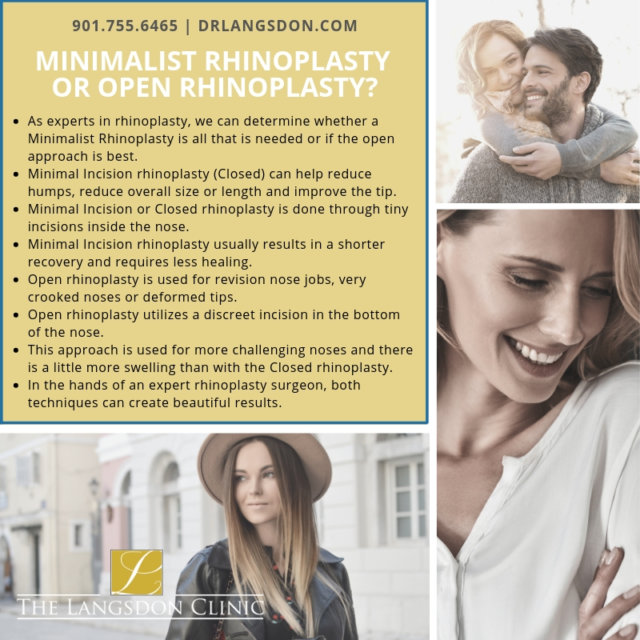
Open vs. Closed Rhinoplasty
Rhinoplasty can also be categorized according to how the surgeon accesses the underlying structures of the nose.
In an open rhinoplasty, a small incision is made across the columella, the strip of skin between the nostrils, in addition to internal incisions. This gives the surgeon broad visualization of the nasal framework and may be useful when more extensive structural work is necessary.
A closed rhinoplasty, sometimes called endonasal or minimalist rhinoplasty, uses incisions placed inside the nose. It can be an excellent approach for selected tip changes, hump reduction, adjustments in nasal size or length, and certain functional corrections.
Dr. Phillip Langsdon has extensive experience with both open and closed rhinoplasty. Rather than favoring one technique for every patient, the approach can be selected according to what provides the best access and control for the changes being made.
Revision Rhinoplasty
Revision rhinoplasty is performed after a previous nose surgery when a patient wants to improve the appearance, structure, breathing function, or overall result.
Secondary rhinoplasty can be considerably more complex than first-time surgery because the original anatomy has already been changed. Scar tissue may be present, cartilage may have been removed or repositioned, and the remaining support structures may need to be reconstructed or carefully preserved.
Patients travel to The Langsdon Clinic from outside the Memphis area for revision rhinoplasty as well as primary surgery. Dr. Phillip Langsdon’s extensive experience with both preservation and structural rhinoplasty gives him multiple approaches to consider when evaluating previously operated noses.
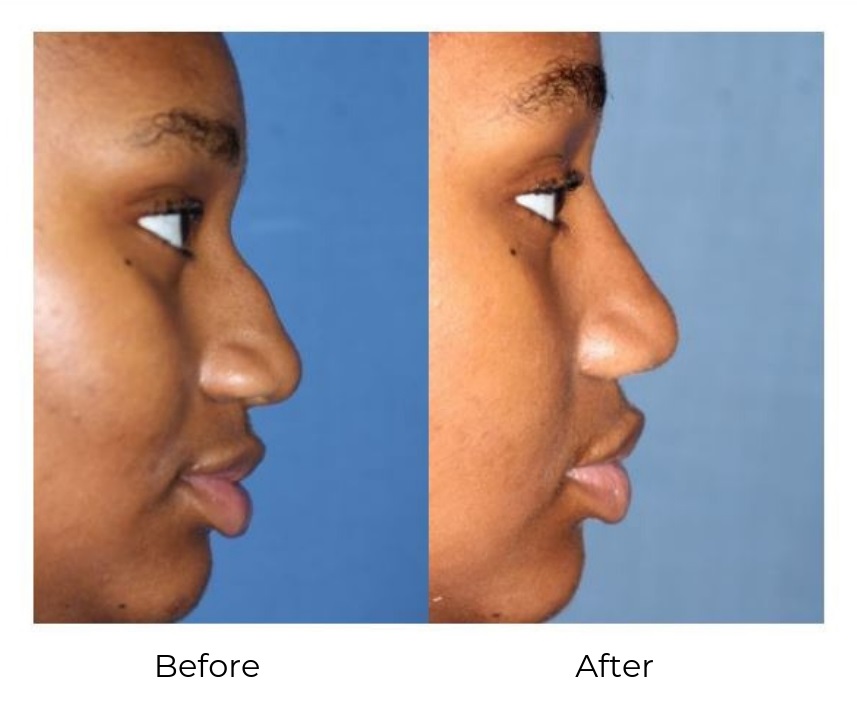
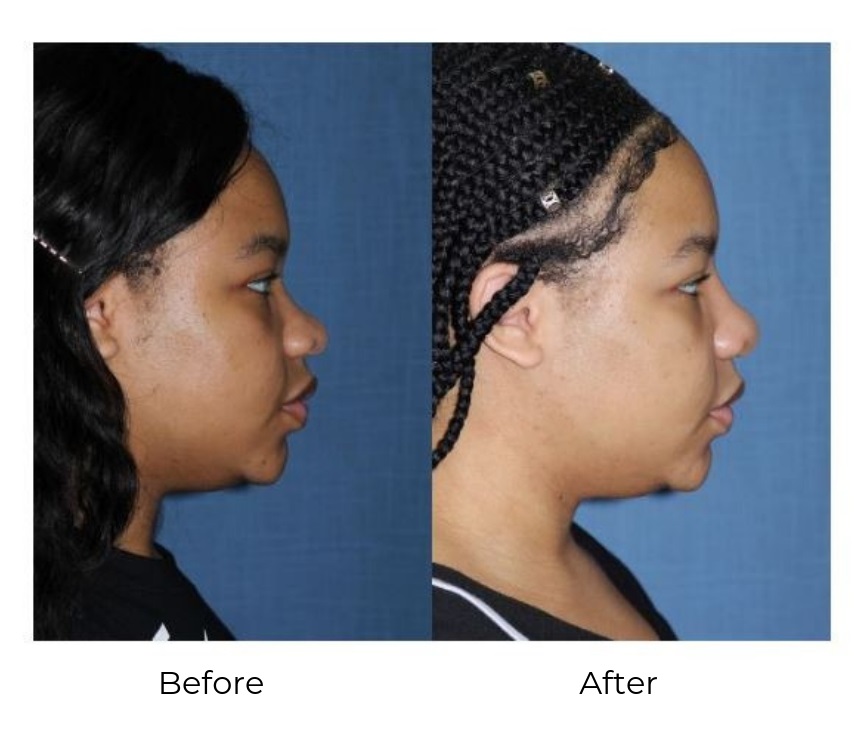
Ethnic Rhinoplasty
Ethnic rhinoplasty is not a single surgical technique. It is an individualized approach that respects the anatomical characteristics, facial proportions, heritage, and aesthetic preferences of each patient.
The purpose should never be to give every patient the same narrow or stylized nose.
Instead, surgery can refine a feature the patient would like to change while maintaining the characteristics that help the nose belong naturally to the rest of the face. The Langsdon Clinic emphasizes individualized planning intended to enhance facial balance without erasing ethnic identity.
Teenage Rhinoplasty
Rhinoplasty may also be appropriate for selected teenage patients once nasal and facial growth is sufficiently mature.
The appropriate timing differs from person to person. Physical development, emotional maturity, motivation for surgery, the nature of the concern, and the expectations of both the patient and family all need to be considered.
For younger patients, rhinoplasty should be a personal decision based on a stable concern, not a response to passing trends or outside pressure.
Dr. Langsdon's Addresses Rhinoplasty Questions
Rhinoplasty Videos

2:40

5:11
2:43
How Do I Know Which Rhinoplasty Technique Is Right for Me?
The right rhinoplasty technique depends on what needs to change and which approach can achieve those changes while protecting the nose’s structure and function.
Two patients bothered by a nasal hump may need completely different operations. One may be an excellent candidate for preservation rhinoplasty, while another may need a structural approach because of a crooked nose, previous injury, weaker cartilage, breathing problems, or different aesthetic goals.
Likewise, open rhinoplasty is not inherently better than closed rhinoplasty, and closed rhinoplasty is not automatically more advanced because it avoids an external incision.
During a consultation at The Langsdon Clinic, we can evaluate factors such as the bridge, tip, nostrils, septum, projection, skin thickness, cartilage strength, facial proportions, previous trauma or surgery, and breathing function before recommending a technique.
Who Is a Good Candidate for Rhinoplasty?
Good rhinoplasty candidates are generally healthy individuals whose facial growth is complete and who have a specific concern they would like to improve.
You may consider rhinoplasty if you are bothered by your nose’s size, shape, width, projection, tip, bridge, symmetry, or proportion. Patients with previous nasal trauma or certain structural breathing problems may also be candidates.
Equally important are realistic expectations. Rhinoplasty can meaningfully improve facial balance, but absolute mathematical symmetry or an attempt to reproduce someone else’s nose should not be expected.
There is also no upper age limit simply because someone is an adult. Older patients sometimes seek rhinoplasty as the nose changes with age, particularly when the tip begins to descend or the nose appears longer.
What Happens During a Rhinoplasty Consultation?
A rhinoplasty consultation is where the surgical plan begins.
Your surgeon will evaluate the nose from multiple angles and consider how its size, shape, projection, and position relate to the rest of your face. Skin quality and thickness, underlying bone and cartilage, tip support, nasal airway, and any history of injury or previous surgery may also influence what can be accomplished.
Just as importantly, the consultation is an opportunity to explain what you notice when you look at your nose and what you do (and do not) want to change.
The Langsdon Clinic can also use 3D imaging to help patients visualize potential changes before surgery. Imaging doesn’t guarantee an exact postoperative result, but it can be a valuable communication tool for establishing shared aesthetic goals and confirming that the surgeon and patient envision similar changes.
What Happens During Rhinoplasty Surgery?
The Langsdon Clinic performs rhinoplasty at its outpatient surgical facility in Germantown.
The exact steps depend on the surgical plan. Through internal incisions or a combination of internal and external access, the surgeon can reshape or reposition the bone and cartilage that create the nasal framework.
A dorsal hump may be reduced, the bridge may be narrowed or straightened, cartilage can be reshaped to refine the tip, the nostrils may be adjusted, and internal structures can be addressed when necessary.
Many uncomplicated procedures can be completed within approximately one to two hours, although more complex primary and revision cases may take longer.
The Langsdon Clinic generally uses twilight sedation supplemented with local anesthesia when appropriate. We will discuss your individual anesthesia plan and surgical details before the procedure.

Schedule Your Facial Plastic Surgery Consultation
Board-certified facial plastic surgeon Dr. Phillip R. Langsdon is the only surgeon in the Mid-South whose practice is limited to and specialized in cosmetic surgery of the face, nose, eyes, head, and neck. A former President of the American Academy of Facial Plastic and Reconstructive Surgery, Dr. Langsdon has earned unprecedented recognition and praise as one of the best facelift and rhinoplasty plastic surgeons in America.
He is joined by Dr. Sarah E. Langsdon who completed a six year integrated plastic surgery residency at the University of Missouri and an additional fellowship specializing in facial aesthetic surgery.
What Results Can I Expect After Rhinoplasty?
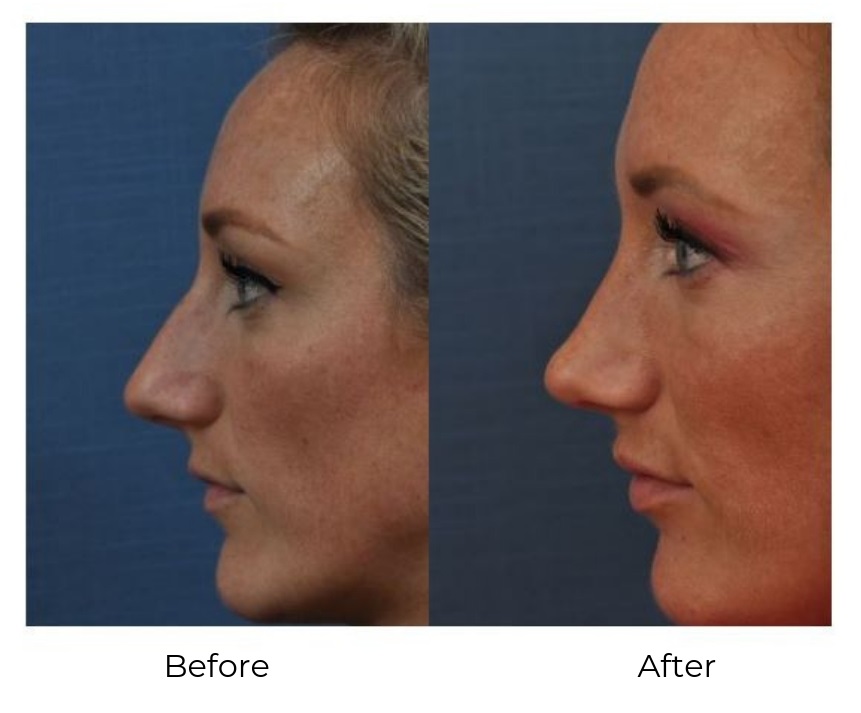
The first changes are visible once the initial splint is removed, but rhinoplasty results develop gradually.
Swelling initially makes the nose appear less refined than the eventual result. The bridge and upper nose often improve earlier, while swelling around the nasal tip can take considerably longer to resolve.
Within the first several weeks, the overall shape becomes clearer. Definition continues improving over the following months as residual swelling subsides and the skin settles over the new framework.
It can take a year or longer for the most subtle aspects of the final rhinoplasty result to fully develop, particularly around the tip. Patients with thicker skin, previous rhinoplasty, or nasal trauma may experience an even longer period of refinement.
What Is Rhinoplasty Recovery Like?
Most patients experience swelling, nasal congestion, and varying degrees of bruising during the first week after surgery.
A protective nasal splint is typically worn for approximately one week. The Langsdon Clinic generally avoids traditional nasal packing, using internal absorbable suturing techniques when appropriate to support the tissues while making early recovery more comfortable.
Many patients can return to light work, school, and routine daily activities after about one week, depending on swelling, bruising, and how they feel.
Patients should limit exercise, strenuous activity, and anything that risks impact to the nose during the early healing period. Patients receive specific postoperative instructions based on their surgery.
If you are traveling to Memphis for rhinoplasty, the clinic will also advise how long you should stay locally before returning home.
Why Choose The Langsdon Clinic for Rhinoplasty?
The Langsdon Clinic has built a national and international reputation around facial plastic surgery. Patients travel to its Germantown facility from throughout the United States and abroad for primary rhinoplasty, preservation rhinoplasty, and complex revision surgery.
Phillip R. Langsdon, M.D.
Dr. Phillip R. Langsdon is board-certified by the American Board of Facial Plastic and Reconstructive Surgery and has devoted his career to plastic surgery of the face, nose, eyes, head, and neck.
His training began in Otolaryngology–Head and Neck Surgery at Indiana University, followed by an additional yearlong fellowship devoted exclusively to cosmetic facial surgery through the American Academy of Facial Plastic and Reconstructive Surgery.
Dr. Langsdon later served as President of the American Academy of Facial Plastic and Reconstructive Surgery in 2018–2019.
Rhinoplasty has remained a major part of his clinical, academic, and educational work. He has presented rhinoplasty techniques at national and international medical meetings, taught physicians in facial plastic surgery, and developed surgical techniques of his own.
Among those contributions is his Lateral Crural Setback maneuver, a technique for nasal tip rotation and refinement that he developed and published. He has also become known for preservation rhinoplasty techniques designed to maintain natural anatomy while avoiding an excessively operated appearance.
His experience extends to both open and closed techniques, primary rhinoplasty, ethnic rhinoplasty, and complex revision cases.
Sarah E. Langsdon, M.D.
Dr. Sarah E. Langsdon brings another generation of advanced facial aesthetic training to The Langsdon Clinic, with a clinical focus that includes rhinoplasty and deep plane facelift surgery.
She earned her medical degree from the University of Tennessee Health Science Center in Memphis and completed a six-year integrated plastic surgery residency at the University of Missouri. She then completed a yearlong fellowship through the American Society for Aesthetic Plastic Surgery specializing in facial plastic surgery.
Her approach combines contemporary surgical training with careful attention to facial proportion, detail, safety, and individualized results.
Together, Drs. Phillip and Sarah Langsdon give rhinoplasty patients access to a practice with decades of established facial surgery experience alongside contemporary advanced training. Their shared philosophy places the emphasis on a nose that looks natural on the individual patient, not a nose that looks like it came from a particular surgeon.
Rhinoplasty for Patients Traveling to Memphis
The Langsdon Clinic’s rhinoplasty practice reaches well beyond Memphis and Germantown.
Patients have traveled from across the United States and internationally for primary and revision rhinoplasty with the practice. For those considering surgery from outside the area, the clinic can help coordinate the consultation, surgical planning, postoperative appointments, and appropriate length of stay in Memphis.
The clinic is located in Germantown, Tennessee, within the greater Memphis area and accessible to patients traveling through Memphis International Airport.
For patients who cannot begin with an in-person visit, ask The Langsdon Clinic whether a virtual consultation is appropriate as a first step.
Schedule Your Rhinoplasty Consultation in Memphis
Whether you are considering your first rhinoplasty, preservation rhinoplasty, revision surgery, or correction of both cosmetic and functional concerns, your procedure should be planned specifically for you. Schedule a rhinoplasty consultation at The Langsdon Clinic in Germantown to explore your options for a natural-looking, balanced result.
Memphis Rhinoplasty FAQ's
With our rhinoplasty technique, an incision is made into the nasal bones when repositioning is required. There is also usually less postoperative discomfort, discoloration, and swelling than with older techniques. We generally avoid traditional nasal packing, which we’ve found significantly improves patients’ comfort during recovery.
Along with our advanced techniques, The Langsdon Clinic offers an exceptional patient experience. Our professional staff will guide you every step of the way and keep you informed about every aspect of your rhinoplasty. We personalize each procedure to fit the patient and create a postoperative recovery plan to support healing.
Many people ask whether the nasal bones are broken during surgery, as is typical with traditional techniques. Our surgical technique is designed to reduce many of the side effects of older approaches, such as extreme swelling and bruising.
A closed rhinoplasty is when all the incisions are placed inside the nose. In an open rhinoplasty, the surgeon also makes a small external incision across the columella to access the nasal structures. Many surgeons prefer the closed method because it can allow faster healing and keeps the incisions hidden. Dr. Langsdon often performs rhinoplasty using incisions placed inside the nose; however, he may make some incisions along the nostrils if they are too wide and need to be resized. These incisions are usually well-hidden by the natural creases of the nose.
Preservation rhinoplasty is an advanced rhinoplasty approach that aims to preserve as much of a patient’s original tissue as possible while improving the general appearance of the nose.
The procedure involves advanced surgical techniques, where the surgeon alters the shape of the nose by strategically and skillfully removing small amounts of cartilage and bone from underneath the nose bridge. Through this process, experienced preservation rhinoplasty surgeons like Dr. Langsdon can reduce the height of the nose bridge, or nasal dorsum, without altering the patient’s dorsal lines. Learn more about the differences between rhinoplasty and preservation rhinoplasty.
The Langsdon Clinic strives to create results that are proportional to the patient’s natural facial architecture. The results should bring the patient’s facial features into harmony while at the same time having an aesthetically pleasing effect. The Langsdon Clinic prides itself on creating results that look natural rather than artificial.
Will My Nose Still Be Uniquely My Own After Rhinoplasty?
Yes. When Dr. Langsdon performs rhinoplasty, he strives to bring out the best in each patient’s facial features by subtly changing the form of the nose to improve facial harmony. He customizes his approach for each patient to create beautifully individual results, with full appreciation for the amazing variety of facial aesthetics. Your nose won’t be the same as it was before your rhinoplasty, but it should still look uniquely your own.
There’s no “best” age for rhinoplasty. Rhinoplasty can be performed on teenagers once their facial bones and cartilage have stopped growing, which coincides with when they stop growing in height. That’s typically at about age 15 for girls and 18 for boys. After that, rhinoplasty can be performed on adults of any age. Cosmetic changes to the nose can be beneficial later in life when the nose changes in a way that is out of harmony with other facial features, growing longer or with a downward-hooked end, for example.
Yes. While rhinoplasty is primarily performed to improve the appearance of the nose and face, it can also include alterations to open narrow or blocked nasal passages. Opening the nasal airway can help resolve certain breathing problems and, in turn, may improve sleep, reduce snoring, and ease fatigue from breathing-related sleep interruptions.
Dr. Langsdon recommends against rhinoplasty for smokers unless they can quit for several weeks before and after the procedure. Smoking increases the risk of bleeding after surgery and of long-lasting swelling in recovery.
Yes, in many cases. Revision rhinoplasty with a skilled and experienced facial plastic surgeon like Dr. Langsdon can improve results from an earlier rhinoplasty. Revision rhinoplasty applies both reconstructive and cosmetic surgery techniques to rebuild and reshape the underlying structure of the nose and restore a natural-looking appearance. Not every cosmetic surgeon performs this delicate work, and Dr. Langsdon’s extensive experience with complex revision cases makes him well suited to evaluate previously operated noses.
Rhinoplasty is almost always considered a cosmetic procedure rather than a medical one, so it is not generally covered by insurance. Exceptions are cases where rhinoplasty is performed to correct certain malformations at birth that can cause significant obstruction of the nasal airway. Surgery to restore nasal form and function immediately after a traumatic injury, before the fractured nasal bones have healed, may also be covered by insurance. However, these are not the typical rhinoplasties Dr. Langsdon performs. We will explain the expected costs of the procedure as part of your consultation and can help you get answers to insurance questions.
Most patients do not find rhinoplasty painful, either during the surgery itself, which is performed under anesthesia, or during recovery. Dr. Langsdon takes great care and uses advanced surgical techniques to minimize trauma to facial tissue during the procedure. You may feel pressure or congestion in the first couple of days after surgery from short-term swelling, but significant pain is uncommon.
Since rhinoplasty is an outpatient procedure, patients can go home the same day as the surgery. Patients are required to have a trusted friend or family member drive them home.
Patients can expect some side effects, such as bruising, swelling, and soreness for the first few weeks of their recovery. These side effects may also be present in the area around the eyes. Dr. Langsdon will prescribe pain medication to help with any discomfort; however, many patients describe the period after rhinoplasty as tolerable. It’s essential that patients keep their heads elevated during the first couple of days of recovery to limit the amount of swelling.
Most swelling and bruising subsides after the first week or two of recovery. Patients should avoid strenuous activity for the first two weeks, and most can return to office work or school about a week after rhinoplasty. While it may take a full year for swelling to resolve completely, The Langsdon Clinic aims for results that look balanced and proportional early on, so many patients feel comfortable being seen in public after a week or two.
Dr. Langsdon typically places almost all the incisions inside the nose. However, if the nostrils are being reduced in size, some incisions might be made in the crease between the nostrils and the cheeks. These incisions are well-hidden and are typically difficult to notice once the nose heals.
The nose needs to be protected while it’s recovering from rhinoplasty. Patients need to keep their heads elevated during sleep and take care that the nose does not bump into anything. Patients can use multiple pillows or a single incline pillow to keep their heads elevated, and they can prop pillows at their sides to avoid rolling onto their sides or stomachs.
Because rhinoplasty changes the structure of your bones and cartilage, rhinoplasty results are generally long-lasting, although the nose, like the rest of the face, continues to change subtly with age.
Patients seeking rhinoplasty in Memphis choose Dr. Langsdon for his natural, balanced results. Dr. Langsdon brings the experience and specialization to plan a result that fits your face. Contact The Langsdon Clinic today to schedule your rhinoplasty consultation.