
Ethnic Rhinoplasty in Memphis, TN

Ethnic rhinoplasty is an individualized approach to nose reshaping that considers a patient’s facial proportions, nasal anatomy, skin characteristics, heritage, and personal aesthetic goals. The objective may be to refine the bridge or tip, adjust the size or projection of the nose, improve symmetry, correct an injury, or address breathing problems while maintaining the ethnic and familial characteristics the patient wants to preserve.
At The Langsdon Clinic in Germantown, Dr. Phillip R. Langsdon has spent more than 25 years specializing in facial plastic surgery and has extensive experience performing rhinoplasty across a wide range of nasal structures and ethnic backgrounds. A former president of the American Academy of Facial Plastic and Reconstructive Surgery, Dr. Langsdon has developed and published rhinoplasty techniques, trained other surgeons, and built a reputation for natural-looking results that attracts patients from throughout the United States and abroad.
He is joined by Dr. Sarah E. Langsdon, who completed a six-year integrated plastic surgery residency at the University of Missouri followed by additional fellowship training in facial aesthetic surgery. Together, they bring extensive facial surgery training and an individualized approach to rhinoplasty at The Langsdon Clinic.
Contact The Langsdon Clinic or call (901) 755-6465 to schedule an ethnic rhinoplasty consultation in Memphis, TN.
What Is Ethnic Rhinoplasty?
Ethnic rhinoplasty is nose-reshaping surgery performed with particular attention to the anatomical and aesthetic characteristics important to the individual patient’s appearance and identity.
The surgical techniques themselves may be similar to those used during other forms of rhinoplasty. The difference lies largely in the planning.
There is no universal ideal for nasal width, bridge height, tip projection, nostril shape, or overall size. A nose that looks balanced on one face may look completely out of place on another.
Ethnic rhinoplasty moves away from a one-size-fits-all standard of beauty. Instead, the surgeon considers how the nose relates to the eyes, cheeks, lips, chin, profile, skin, and overall facial structure before deciding what should change and what should remain.
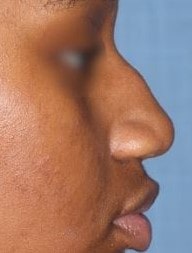
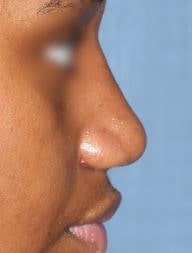
What Can Ethnic Rhinoplasty Change?
Patients seek ethnic rhinoplasty for many different reasons. Depending on the anatomy and individual goals, surgery may:
- Adjust the length, width, or projection of the nose
- Refine or reshape the nasal tip
- Alter the height or contour of the bridge
- Straighten a crooked or off-center nose
- Improve nasal symmetry
- Change a nose that appears too large or too small for the face
- Improve the effects of a previous injury
- Add structural support where needed
- Correct certain anatomical causes of breathing difficulty
- Create better balance between the nose and other facial features
Some patients want to refine one feature, such as the bridge, tip, or nostrils, while others need several changes to improve overall balance. Each concern may require a different technique, so the surgical plan should match the patient’s anatomy and goals.
How Is Ethnic Rhinoplasty Different from Standard Rhinoplasty?
The most important difference is not necessarily the surgical technique. It’s how the procedure is planned.
People from different backgrounds, and even members of the same family, can have significant differences in nasal bone structure, cartilage strength, skin thickness, bridge height, tip support, nostril shape, and facial proportions.
These characteristics influence what can be changed and how those changes will appear after healing.
For example, thicker skin can affect how sharply tip definition appears. Softer cartilage may require more structural support. A patient with a lower bridge may want additional definition rather than reduction. Someone else may want to narrow or reduce selected structures while maintaining other ethnic characteristics.
Rather than making assumptions based on ethnicity alone, Drs. Phillip and Sarah Langsdon evaluate each patient’s nasal anatomy.
Which Ethnic Features Can Be Preserved During Rhinoplasty?
That depends entirely on what the patient values about their appearance.
Some patients want to maintain:
- The strength or height of the nasal bridge
- Natural nostril shape
- Nasal width
- Tip characteristics
- The relationship between the nose and lips
- Familial features
- Characteristics associated with their cultural or ethnic background
Others may want significant changes in one of those same areas. There is no predetermined list of features that must be preserved simply because a patient comes from a particular ethnic background.
The consultation should establish what the patient wants changed and what they want left alone.
Can Ethnic Rhinoplasty Still Create a Natural-Looking Result?
Yes. In fact, maintaining a natural appearance is one of the primary goals.
A substantial adjustment to the bridge or tip can still look natural when the new proportions fit the patient’s eyes, cheeks, lips, chin, skin, and facial shape. Conversely, even a technically precise rhinoplasty can look artificial if the nose is shaped according to an aesthetic that does not belong on that face.
At The Langsdon Clinic, the goal is not for someone to look at the patient and immediately notice a “nose job.” The nose should simply look more balanced.
How Do Skin Thickness and Cartilage Affect Ethnic Rhinoplasty?
Skin thickness and cartilage quality are important parts of every rhinoplasty.
Thicker skin can soften the appearance of the underlying cartilage and may limit how sharply certain refinements appear, particularly around the nasal tip. It can also influence how long it takes swelling resolve.
Cartilage strength varies as well. Some patients have strong cartilage that can be reshaped while maintaining support, while others have softer or weaker cartilage that may require reinforcement to create or maintain the desired contour.
These differences help determine how the surgery should be performed and what result is realistic. Our surgeons carefully examine your skin and cartilage beforehand to help reduce surprises during surgery.
Can Ethnic Rhinoplasty Narrow a Wide Nose?
Yes, when nasal width is one of the patient’s concerns.
A wide appearance may result from several different structures, including the nasal bones, tip cartilage, nostril width, soft tissue, or a combination of these features.
How the nose is narrowed depends on the anatomy. In some patients, the bridge is the main issue; in others, the tip, nostrils, or a combination of areas may need to be addressed.
Rather than creating the narrowest possible nose, surgery improves proportion without removing characteristics that help the nose fit naturally with the rest of the face.
Can Ethnic Rhinoplasty Refine a Broad or Bulbous Nasal Tip?
Often, yes. A broad or bulbous tip can be refined by reshaping and supporting the underlying cartilage. Skin thickness, cartilage strength, and tip projection all affect the degree of refinement that can be achieved.
The aim is to improve definition while maintaining a tip shape that remains proportionate to the bridge and the patient’s overall facial structure.
Can Ethnic Rhinoplasty Raise or Reshape the Nasal Bridge?
Yes.
Some rhinoplasty patients want to reduce a prominent bridge, while others want additional bridge height, definition, or support.
When augmentation is needed, cartilage grafting or other structural techniques may be used depending on the anatomy and desired change.
Bridge height should be evaluated in relation to the forehead, eyes, cheeks, lips, chin, and profile rather than against a single aesthetic standard.
Can Ethnic Rhinoplasty Correct a Crooked Nose?
Potentially.
A crooked or off-center nose may involve the nasal bones, cartilage, septum, previous trauma, or several structures together.
Correcting it may require reshaping or repositioning the nasal framework and addressing internal structural problems at the same time.
Perfect symmetry is not realistic in the human face, but rhinoplasty can often create meaningful improvement in visible deviation and overall balance.
Can Ethnic Rhinoplasty Improve Breathing Problems?
Yes. Rhinoplasty may address functional concerns as well as appearance.
Some patients have a deviated septum, narrowing of the nasal airway, previous trauma, or another structural problem that makes breathing difficult.
When aesthetic and functional concerns occur together, the internal and external structures of the nose can be evaluated as part of the same surgical plan.
Improving appearance should never come at the expense of nasal function. Maintaining adequate structural support and an open airway is an important part of rhinoplasty planning.
Can Preservation Rhinoplasty Be Used for Ethnic Rhinoplasty?
In selected patients, yes.
Preservation rhinoplasty is based on retaining healthy native nasal structures whenever they can be reshaped or repositioned instead of unnecessarily removed and reconstructed.
That philosophy can work particularly well for patients who want refinement while maintaining natural characteristics of their existing nose.
However, it is not appropriate for every case. Significant augmentation, major realignment, complex deformity, or weak structural support may require more traditional structural rhinoplasty techniques.
An experienced rhinoplasty surgeon should be comfortable with multiple approaches so the technique can be chosen around the patient rather than the other way around.
Is Ethnic Rhinoplasty Performed Open or Closed?
Either approach can be used.
During closed rhinoplasty, incisions are made inside the nose.
During open rhinoplasty, those internal incisions are combined with a small incision in the narrow strip of tissue between the nostrils, providing wider access to the underlying nasal framework.
The choice between open and closed rhinoplasty depends on the patient’s anatomy and the changes being made.
Dr. Phillip Langsdon and Dr. Sarah Langsdon have extensive experience with both approaches, allowing the surgical access to be selected according to the needs of the individual operation.
What Happens During an Ethnic Rhinoplasty Consultation?
The consultation begins with listening. Our surgeons need to understand what you like about your nose, what bothers you, which features you want to preserve, and what you hope surgery will accomplish.
Your nose will then be evaluated for:
- Bone and cartilage structure
- Bridge shape and height
- Nasal width
- Tip shape and support
- Skin quality and thickness
- Nostril shape
- Septal anatomy
- Breathing function
- Facial proportions
- Previous injury or surgery
From there, we can recommend an approach and explain what can realistically be achieved. The Langsdon Clinic may also use computer imaging in selected cases to help patients visualize potential changes and communicate more clearly about surgical objectives.
What Happens During Ethnic Rhinoplasty Surgery?
Ethnic rhinoplasty is performed at The Langsdon Clinic’s ambulatory surgical center in Germantown.
Medication is provided before surgery to help patients relax and prepare for the procedure. Anesthesia is then used so that the patient is asleep during surgery. The exact operation depends on the anatomy and surgical plan.
Incisions may be placed entirely inside the nose or may include a small incision beneath the nasal tip in the narrow strip of tissue between the nostrils.
Depending on what needs to be changed, the surgeon may:
- Remove or reduce bone or cartilage
- Reshape existing structures
- Reposition bone or cartilage
- Add grafts for support or contour
- Straighten portions of the nasal framework
- Refine the tip
- Address structural breathing problems
For standard cases, rhinoplasty generally takes approximately one to three hours.
After surgery and anesthesia recovery, a trusted friend or family member can drive the patient home.

Schedule Your Facial Plastic Surgery Consultation
Board-certified facial plastic surgeon Dr. Phillip R. Langsdon is the only surgeon in the Mid-South whose practice is limited to and specialized in cosmetic surgery of the face, nose, eyes, head, and neck. A former President of the American Academy of Facial Plastic and Reconstructive Surgery, Dr. Langsdon has earned unprecedented recognition and praise as one of the best facelift and rhinoplasty plastic surgeons in America.
He is joined by Dr. Sarah E. Langsdon who completed a six year integrated plastic surgery residency at the University of Missouri and an additional fellowship specializing in facial aesthetic surgery.
Ethnic Rhinoplasty for Patients Traveling to Memphis
The Langsdon Clinic’s rhinoplasty practice extends beyond Memphis and Germantown.
Patients travel to the clinic from across the United States and internationally for primary and revision rhinoplasty and other facial plastic surgery procedures.
For patients traveling from outside Tennessee, our practice can help coordinate your consultation, surgical planning, and appropriate postoperative follow-up.
What Is Recovery Like After Ethnic Rhinoplasty?
Most patients should plan to spend the first week recovering at home.
Swelling, bruising, tenderness, and nasal congestion are expected during early healing. Patients at The Langsdon Clinic typically report relatively little discomfort and often require limited pain medication.
Keeping the head elevated helps reduce swelling.
Most patients can return to office-based work or school after approximately one week, depending on how quickly swelling and bruising improve.
Strenuous activity should be avoided during the early recovery period, and excessive exertion is restricted for approximately four weeks.
Much of the early swelling resolves within the first week or two, but residual swelling lasts longer.
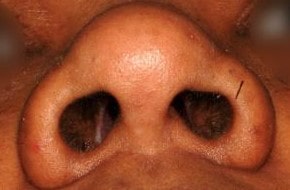
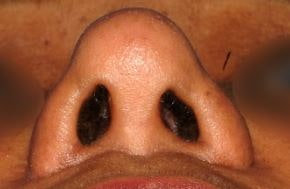
How Long Does It Take to See Final Ethnic Rhinoplasty Results?
Rhinoplasty results develop gradually. The overall change becomes visible relatively early, but subtle swelling, particularly around the nasal tip, can persist for many months.
Skin thickness and the extent of surgery can affect how quickly the final contours become visible.
The nose will continue to become more refined over the following months, and it may take up to a year for residual swelling to disappear completely.

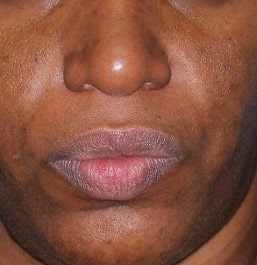
Why Choose The Langsdon Clinic for Ethnic Rhinoplasty?
Phillip R. Langsdon, M.D.
Dr. Phillip R. Langsdon is a board-certified facial plastic surgeon whose practice has been devoted to cosmetic surgery of the face, nose, eyes, head, and neck for more than 25 years.
He served as president of the American Academy of Facial Plastic and Reconstructive Surgery in 2018–2019 and has played a significant role in rhinoplasty education throughout his career.
Dr. Langsdon has published innovations in rhinoplasty technique, taught physicians specializing in facial plastic surgery, and led rhinoplasty training for other experienced surgeons.
His experience includes a wide range of nasal anatomy and ethnic backgrounds, with an emphasis on achieving natural-looking improvements while maintaining characteristics that are important to the individual patient.
Patients travel to The Langsdon Clinic from throughout the Mid-South, across the United States, and internationally for rhinoplasty and facial plastic surgery.
Sarah E. Langsdon, M.D.
Dr. Sarah E. Langsdon brings advanced training in both plastic surgery and facial aesthetics to The Langsdon Clinic.
She earned her medical degree in Memphis before completing a six-year integrated plastic surgery residency at the University of Missouri. She then completed an additional fellowship specializing in facial aesthetic surgery.
Her training gives her experience evaluating the structural and aesthetic relationships that shape the face, with careful attention to individualized planning and natural-looking results.
Together, Drs. Phillip and Sarah Langsdon provide ethnic rhinoplasty patients with a facial plastic surgery approach that respects anatomy, personal preferences, heritage, and the individual characteristics that make every face different.
View Gallery
Visit our Before and After Photo gallery to see real patient results at The Langsdon Clinic.
Schedule an Ethnic Rhinoplasty Consultation in Memphis
Contact The Langsdon Clinic today to schedule a consultation with Dr. Phillip Langsdon or Dr. Sarah Langsdon. They examine your nose, analyze the shape of your nasal structures and the quality of your underlying structures and skin, consider the harmony of your facial features, ask questions to understand your goals, and recommend an approach suited to your needs.
Patients seeking rhinoplasty in Memphis have chosen The Langsdon Clinic time and again for its natural, balanced results. If you are considering ethnic rhinoplasty, call (901) 755-6465 or reach us online today.
Memphis Ethnic Rhinoplasty FAQs
Ethnic rhinoplasty considers the unique nasal structures and aesthetic preferences of different ethnic backgrounds. The goal is to enhance the appearance of the nose and improve its function while maintaining harmony with other facial features and respecting the patient’s ethnic heritage.
Before your consultation, consider your goals and gather photos of noses you find appealing. Be ready to discuss your medical history, any previous nasal surgeries, and any breathing issues you may have.
Drs. Phillip and Sarah Langsdon consider several factors, including the patient’s nasal structure, skin thickness, cartilage strength, and the overall harmony of facial features. They also consider the patient’s goals and desired outcomes.
Yes, for minor adjustments. Nonsurgical rhinoplasty uses dermal fillers to reshape the nose. However, it’s temporary and unsuitable for significant changes or functional improvements.
Final results can take up to a year. Initial swelling subsides within a few weeks, but residual swelling continues to diminish as the nose settles into its new shape.
Yes. Ethnic rhinoplasty can correct structural issues that cause breathing problems, such as a deviated septum, while addressing aesthetic concerns.
Patients typically need to rest at home for the first week, avoiding strenuous activities for several weeks. Most swelling subsides after a couple of weeks, but residual swelling can take several months to resolve fully.
As with any surgery, ethnic rhinoplasty carries risks such as infection, scarring, and anesthesia complications. Choosing an experienced facial plastic surgeon can help minimize these risks.
Choosing a surgeon highly experienced in ethnic rhinoplasty is vital. At The Langsdon Clinic, the approach focuses on enhancing the natural beauty of each patient’s face while maintaining ethnic characteristics and facial harmony.
Usually not. Incisions are typically made inside the nostrils or in inconspicuous locations. While there may be some initially visible scarring, it usually fades significantly over time and becomes barely noticeable.